For Ezra’s Sake

Dear friends,

Thank you for reading this. I’ve been wanting to talk to you about something but wasn’t sure how. You could say that in writing this open letter I’ve taken the coward’s way out. But hopefully I can express myself better this way, which is good because this is really important.


My best friend at school was Rachel (a lot of you know that!). We’re still friends now but inconveniently she lives 214 miles away. But back then, at the Comp, we were inseparable. Her mum was a PE teacher, but not in our school. I expect if she’d worked in our school it would have been hard for Rachel. It’s pretty inevitable that school kids complain about most teachers at some point or another. Few teachers escape unscathed from the cutting remarks of a hormonal adolescent mob. (I know this because I once was a hormonal adolescent, and later I was a teacher.) But if Rachel’s lovely mum (whose name I can’t even mention here, out of respect) had worked in our school, I wouldn’t have insulted her. I wouldn’t have made up a silly name for her, or rolled my eyes when I knew it was time for PE with her, or made fun of her when, for example, she wore something that didn’t match (I’m speaking hypothetically. She always looks fab). I wouldn’t have done that, of course. Why? Well, at the very least out of loyalty for Rachel, and out of respect for her mum. As a friend, the least I can do is not slag off her mum.

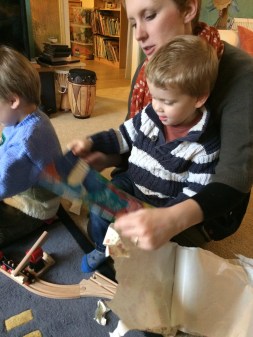
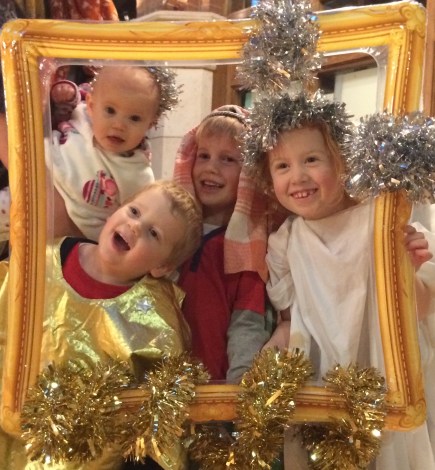
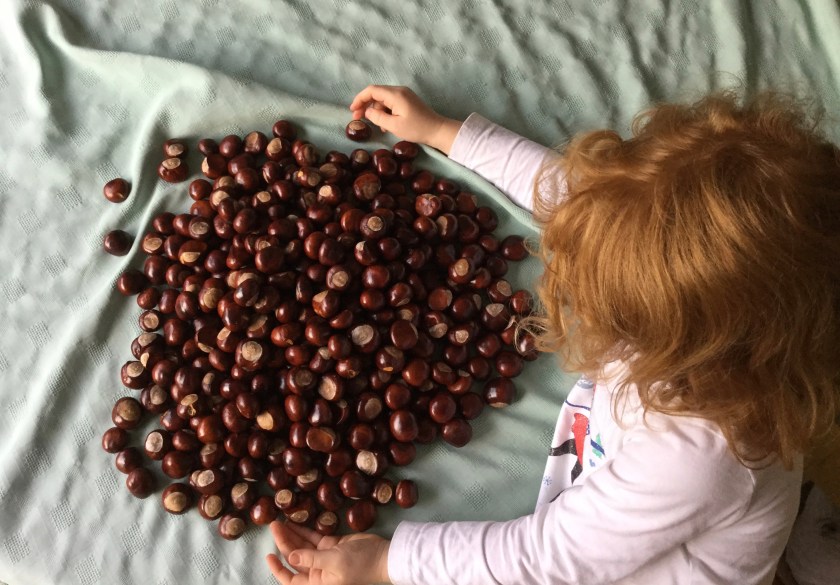
Maybe you can’t relate to this. Maybe you don’t like your mum, or maybe your best friend hated her own mum. Maybe you all got together and tore your mums to shreds on a regular basis. So let me try another example. Here are some pictures of my firstborn son, Ezra*.


I love Ezra John Brooks. He is precious to me beyond measure. I love the bones of him. I could eat him. When I listen to him explain something to me, my heart skips a beat. I heard him tell his teacher yesterday, “I’ll bring in my slip for the trip tomorrow,” and my heart swelled with joy. I know, it’s pathetic! What’s happened to me? It’s called motherhood.

So try to imagine for me, if you can, that you and I are together one day, running for a train. Infuriatingly, we just miss the train, arriving just as it pulls away, and you yell down the platform, “EZRA JOHN!”
That would come as quite a shock to me.
Or if you stub your toe and you shout, “Ezra $*!#ing John Brooks that hurt!”
Or maybe you order a glass of white wine and it costs £8. “For Ezra’s sake!” you exclaim.

If we’re together, and I hear you use his name like that, how will I feel? In my head I might think, “Hey, don’t blame him!” But the reaction would first and foremost be emotional. It would be like a knife to the heart, wouldn’t it? Hearing you use my son’s name like a swear word would make me feel like you were dragging my gorgeous boy through the proverbial mud. His name is part of him; they can’t easily be separated.  Now, I know you’d never do that. It would be a pretty weird thing to do! But even if people had, for some terrible reason, started using Ezra’s name in that way, I’m sure you wouldn’t use it. Not in front of me. And actually, out of respect for me I don’t think you’d do it while I wasn’t there either. “That’s my friend’s son” you’d think. “I’ll use a different word.”

Perhaps you don’t have a child of your own. In which case, try to imagine how you’d feel if I used the name of your favourite niece or nephew, or your boyfriend, or your Dad, or anyone you love and cherish. If I used their name when I was angry, or in pain, or sick of waiting, you wouldn’t just object intellectually: you’d be hurt.

Now here’s the really awkward part. If you use The Lord Jesus’ name as a swear word, that’s how it makes me feel. It’s a knife to the heart. He is my most precious thing, my treasure. He is ‘my North, my South, my East and West, My working week and my Sunday rest.’** He is so precious to me that my identity is wrapped up in him. When you insult him, you insult me (and vice versa). You may think this is crazy or weird, but it’s still true. So I wonder if I could ask you, at least when you’re around me, and even if it’s just for my sake, could you please, please not do that? I’d be so grateful. Some of you don’t do it, so if you’re thinking “I’ve never done that!” then thank you, and I hope you found this worth reading anyway. But I’ve written this more for the people who do use Jesus’ name like that. I love you, and I love spending time with you. I’d also really be so pleased if you could take this on board. Here are some words from one song which helps to put across how I feel about Jesus’ name:

What a wonderful Name it is
Nothing compares to this
What a wonderful Name it is
The Name of Jesus

You have no rival, you have no equal
Now and forever, our God reigns
Yours is the kingdom, yours is the glory
Yours is the Name, above all names

What a powerful Name it is
The Name of Jesus Christ my King.
(Hillsong, What a Beautiful Name)

Lots of love,

Me.

P.S. This isn’t the best reason not to misuse God’s Name, but it’s a valid one.

*I  picked one of my children for the sake of this article, but it could have been any.
**WH Auden, Twelve Songs (IX).

Ready?

helmet.jpg

I asked for lots of “old lady” presents for my Birthday last month – and I was so pleased with them! Afternoon tea, tickets to watch the theatre at the cinema (it’s cheaper), and a book about Winston Churchill. This is the first of what may be several blog posts influenced by the big man himself, Sir Winston, First Lord of the Admiralty and Prime Minister of Great Britain (yes, that Winston Churchill).

The other day I read a speech he made to the House of Commons in 1911 when he was trying to introduce unemployment insurance. He talked about the fact that when the economy is doing quite well, we forget what it was like in harder times:

“Providence has ordained that human beings should have short memories, and pain and anxiety are soon forgotten. But are we always to oscillate between panic and torpor?”

I think (surprise, surprise) that he makes an excellent point. In many areas of life, we can so often act quickly and enthusiastically when something is urgent (e.g. you have 24 hours to do your tax return or complete your school application) or something is really concerning (e.g. you’re about to go overdrawn or get a parking ticket, or you think your child has a tropical disease). But the rest of the time, we can be a bit lazy and complacent.

We can see in God’s word that Sir Winston is right about humans being forgetful. Take the book of Judges for example: God’s people rebel, they get in trouble, they cry out for help, God saves them, they rebel etc. etc. Or consider Pharoah’s cupbearer in Genesis 40-41. Terrified about his dream, Joseph is the only one who can help him. Joseph asks him for one favour in return: “The chief cupbearer, however did not remember Joseph; he forgot him.” Then, when he’s panicking two years later, “Today I’m reminded of my shortcomings…” (Unbelievable!) Or in the New Testament, there are so many reminders to pray and keep trusting in the Lord (e.g. Philippians 4:4-7; James 1:22-25; 1 Peter 5:6-11), because we forget to do it, or we’re just lazy (or torpid, as Churchill would say).

As I wrote last week, we’ve been thinking about spiritual disciplines. I think many of us who struggle to keep up with regular, persistent prayer, find it much easier when we’re in a panic over something. My child is being bullied, or my husband might lose his job, or my mum has had some worrying test results. At these times, I don’t struggle to remember to make time to pray. It’s my priority. But when things are just pootling along nicely, I soon forget those concerns about provision or life and death, and then I might find my prayer time slips down the “to do” list.

So rather than “oscillating between panic and torpor,” would it not be better for my relationship with the Lord and with everyone around me (as well as my own sanity) if I chose secret option C? Perhaps we could call it Readiness. If I’m praying regularly for people I love, and thanking God for his ongoing provision, and asking him to help me serve him better, and the million other things there are to pray about, then when the air raid siren goes off I won’t be running around scrabbling to find shelter. I’ll be ready. I’m aware I’ve moved into a war metaphor now instead of an unemployment metaphor. Maybe it’s because I’m reading a book about Churchill, (did I mentioned that?) or maybe it’s because God uses a war metaphor when it comes keeping going in the Christian life:

Therefore put on the full armour of God, so that when the day of evil comes, you may be able to stand your ground, and after you have done everything, to stand. Stand firm then, with the belt of truth buckled round your waist, with the breastplate of righteousness in place, and with your feet fitted with the readiness that comes from the gospel of peace.  In addition to all this, take up the shield of faith, with which you can extinguish all the flaming arrows of the evil one.  Take the helmet of salvation and the sword of the Spirit, which is the word of God.
And pray in the Spirit on all occasions with all kinds of prayers and requests. With this in mind, be alert and always keep on praying for all the Lord’s people. (Ephesians 6)

Let’s put on the armour of God, so that when the unexpected happens (bullyinh, bereavement, redundancy), or even just the everyday stuff (tantrums, tummy bugs, mess) we can stand firm and not run around like headless chickens, as though we don’t have an awesome and powerful God who is in control of even this.

Related post: Fight for your Life.

As ever, please share if this is helpful, and leave a comment if you have any!  Thanks for reading.

Monkey See?

img_2253

I’m trying to teach my children the piano. I can play, but I never do. They never practise, so we’re not making much progress. I know that if they saw me play, they’d probably play too.

When my husband does the washing up, he sings worship songs as loud as he dares (my children are heavy sleepers). When my 5-yr-old son plays with his Lego, he sings worship songs, too.

I have a lovely friend who always comments on my children’s clothes when I see her. She told me one day that her son is really fussy about what he wears, and she doesn’t know where he gets it from.

My neat-freak friends despair when their children cry over spilt yogurt; my own children are hopelessly messy and I know where they get that from.

I used to have so much trouble getting my children to eat vegetables, and when I asked people for advice they usually said first, “do you eat vegetables?”


Your children don’t just learn from what you say. In fact, many would argue that they learn a lot more from your actions than from your words. This is such a sobering thought.

A mentor of mine, Linda Marshall, used to say to me that if you wanted people to learn something, you should tell them, show them and then tell them again. I need to remember that the “showing” part speaks volumes.

I’ve been challenged over the past week about “spiritual disciplines” (which means reading the Bible and praying). I do these things, but I am not as committed to them as I am to teaching my children to do them. So if I don’t prioritise them myself, why should they value them? And worse still, am I teaching them to be hypocrites?

Thinking more broadly, I might teach my children to put Jesus first, but if I clearly put their education or their extra-curricular activities first, then why should I expect them to grow up following Jesus? I know this is a problem in many youth groups: parents end up blaming the youth leaders because their children give up on church, but they’ve clearly modeled to their children over the years that church is bottom priority.

We’ve just started a series at church on The Sermon on the Mount (Matthew 5-7). These words from Jesus are seriously challenging:

‘Enter through the narrow gate. For wide is the gate and broad is the road that leads to destruction, and many enter through it. But small is the gate and narrow the road that leads to life, and only a few find it.’

As Pastor Andy Mason said, the wide gate isn’t necessarily the way of sex, drugs and rock and roll. It can also be the way of false religion and hypocrisy. And what could be more hypocritical than telling my own children to rely on God through prayer, but not doing it myself? Instead of just telling my children to scoot along the narrow way that leads to life, I need to be on it myself. Otherwise why should they believe me?

They won’t find it much of a struggle to praise the Lord if they see that I truly love and worship him myself, with my words and my actions. This means that when I say, “Not now, I’m just reading my Bible,” I’m actually doing them a great favour. I read a leaflet once that said you shouldn’t feel guilty about reading a book in front of your children, because you are teaching them to love reading. Don’t feel bad about praying or reading the Bible when your children are safely doing something else (CBeebies?), because you’re showing them that this Jesus thing is real for you, too. It also shows them that we can’t sustain ourselves; we need Him to feed us and help us each day. As Pastor Andy says, if Jesus needed to pray each day, how can we survive without it?

And I just can’t mention the narrow and wide roads without ending on a Colin Buchanan song:

“Big car, sweet ride! But tell me where you gonna drive that thing?
Cos there’s a wide, wide highway and it leads to destruction;
There’s a narrow, narrow way and it leads to life;
You’ve got to drive, drive, drive with your eyes on Jesus
He’s the King, He’s the prize,
He’s the narrow, narrow, narrow way that leads to life!”

As ever, please leave your comments by clicking on the speech bubble at the top of this post.  And do share if you’ve found it helpful, thanks!

New Year, New Disappointments

Book review – John Hindley, Dealing with Disappointment

img_2302

Did you have a disappointing 2016? Well I do hope your 2017 is less so.

That’s not something people usually write in your Christmas card, but it’s pretty appropriate. We did actually get a card saying words to that effect, and I appreciated its realism.  Our 2016 wasn’t bad at all, as years go, but it was peppered with disappointments, as is all of life if we’re being completely honest.

Let’s take parenting as an example.  Being a parent is a wonderful blessing, for which I am truly thankful.  However, I would be lying if I said there was nothing disappointing about it.  The scope for disappointment is huge and varied.  Perhaps you were disappointed with how difficult (or easy) it was to conceive, or with how you felt during pregnancy. Perhaps you wanted a natural birth and in reality that was impossible – or vice versa! It’s easy to be disappointed with how little sleep you get and how slowly things improve.  You might feel disappointed with your child’s nursery (or at least the cost of it), or school, or their behaviour, or their interest in Jesus.  There are countless other opportunities to be disappointed as a parent, and I haven’t even mentioned the major one, the thing that disappoints me most, which is my own sin.  My selfishness, impatience, inconsistency, pride, self righteousness, unkindness and ingratitude.  And the rest.

So, what can be done? Well, I was so pleased to read this book by John Hindley, in which he goes through reasons we are disappointed and when that is entirely appropriate as well as when it isn’t.  As he writes, “you should be disappointed.”  It’s inevitable in this fallen world. This book, as the title suggests, helps us deal with that disappointment in an appropriate way so that we can use it to focus all the more on Christ’s return.

The first part of the book discusses why we are disappointed, and how the gospel can change our attitudes.  The second part is more practical, addressing different specific reasons for disappointment: our situations, our success, our ministry, ourselves, and God.  I found all of it really helpful: it really is a breath of fresh air.

Here are three highlights for me:

I really appreciated the way Hindley writes about parenthood, and even specifically motherhood.  I felt like he understands what it’s like.  He must communicate well with his wife, I assume!

The style of the book is really simple, clear and direct.  Hindley is succinct and challenging, which you really want when you’re short of time and looking for practical encouragement.

He emphasises the need for community , and how we are not meant to fight the Christian fight alone.

I hope that you will choose to read this book this year, because no matter how many times you are wished a “Happy New Year,” 2017 will not be free of disappointments. And that’s ok!  I hope you have a joyful January.

You can spend your Christmas money on this fabulous book here at the Good Book Company.

P.S. Did you notice I wrote this whole review without making any jokes about the book “not being a disappointment” or any similar cringe-worthy statements! It took some self control, I can tell you.  Well done me!


If only they’d checked!

IMG_0197.JPG

I really enjoyed this Christmas bite from the splendiferous Martin (he ain’t heavy) Ayers.  Perhaps you can spare 7 mins to have a listen too.  (I think it must have followed a little drama sketch, but you should be able to follow it without much trouble!)

Whether you’re an “Amos” or a “shepherd”, I hope you make the most of your Christmas xx

Hand-in-Hand to Bethlehem

img_2231

I love Christmas, me. I love Chris Rea, Wizzard, Paul and Yoko and the Pogues. I love carols. I love mince pies, mulled wine, and sausage stuffing.   I love buying presents for my family and friends. I love having something to be excited about. I am like Scrooge, the way he turned out in the end. (I love A Christmas Carol.)

Christmas certainly means different things to different people. This week I was reading about the trend of buying just four presents for your child: one thing they want; one thing they need; one thing to wear; one thing to read. I also read a lot of opinions about this idea, which I found quite enlightening. I turns out that the idea of only buying four gifts for your child is pretty scandalous. I suppose that shouldn’t surprise me, as Christmas for many people is focused on their children. When I had my first child, someone said to me that I’d enjoy Christmas much more now because it’s more magical with children around. I kind of know what he meant, but to be honest I don’t think my brother and I ever lost the magic of Christmas. We behave like children as soon as we cross the threshold of our parents’ home anyway.

It’s true, is it not, that much of Christmas involves watching your children. Watching them in the school play; watching them opening their presents; watching them sit on Santa’s knee; watching them ride their new bike. And I’m not judging that, but I think there must be more to Christmas than that. I feel that if our Christmas joy is wrapped up in our children, disappointments may abound. What if they are playing the innkeeper’s silent dog again? What if they have a trantrum abut their presents? What if they cry on Satna’s knee? What if they fall of their bike and end up in A&E? And, perhaps worst of all, what if they know that our Christmas joy depends on their contentment? That’s a lot of pressure.

I think we can have a more joyful perspective. My pastor says that in marriage, rather than spending our lives staring into each other’s eyes, we should be walking hand-in-hand towards the throne of God. Or as Tim Keller puts it, we say “I want to partner with you and God in the journey you are taking to his throne. And when we get there, I will look at your magnificence and say, ‘I always knew you could be like this. I got glimpses of it on earth, but now look at you!” (from The Meaning of Marriage.)

I know that parenting is not marriage. They are different. However, if we are walking hand in hand towards the throne and taking our children with us, how much more exciting that will be than if we are just gathered around our children, focusing on them. And how liberating it will be for us and them if we know that Jesus is the one who makes Christmas wonderful.

If the Nativity play serves as a reminder that God’s Son came to live amongst us, then nobody will mind which part they play. (My children’s school play isn’t anything to do with Jesus this year, but thankfully they’ll be in a couple of other nativities.) If the gifts are there to remind us of God’s amazing gift of his perfect Son, then we’ll be more than happy with one or two (or three or even four!). If we’re celebrating the birth of Jesus and all that means for us as God’s people, we won’t have time to queue up for Santa’s grotto anyway.   And as for the trip to A&E, that will be something of a disappointment. But that’s OK, because we’re looking ahead to a perfect world, made open to us by the coming of our Saviour.

It’s so easy at Christmas to get our heads down and forget the bigger picture. To get stressed about the shopping or the cooking or the costume-sourcing. But I’m going to try to lift my eyes to Jesus, to his scandalous incarnation, to God’s glory, to good news of great joy, and I’m hoping that my children will follow my gaze and look up at him with me.

This I Know

img_0189

Parents get asked a lot of questions.  My children like to grill me on the way to school, while I’m trying to keep them all from getting run over or walking in dog poo.  The questions range from “Is it C THREE PO or C E PO?” to “How does fruit grow?” and often include several follow-up questions.  Sometimes I don’t know the answers; sometimes I do.

My friends ask me questions sometimes too, and sometimes I know the answers, but sometimes I don’t.  Sometimes life gives me questions to ask, and often I cannot find the answers.

I know why bad things happen in general, but I don’t know why certain bad things happen.  This week I found out that a 3 year old boy who used to play with my son went to bed on Friday night with a cold and never woke up.  How utterly tragic and horrifying.  I don’t know why that happened.

When something devastating happens, people often say “I don’t know what to say.”  Sometimes there isn’t a lot to say, other than words of mourning.  And often we don’t feel we should say those words.  Words such as “why?” and “how long?”  Maybe we feel that instead of asking questions, we should have the answers.  But sometimes nobody has the answers.

I know that death entered the world when sin entered the world, but I don’t know why certain people die when they do.  When they’re so young, when so many people will miss them.

I know that we sin against each other because we sin against God, but I don’t know why certain people get away with doing such terrible things to people.

I know that because of sin there is injustice, but I don’t know why some people never have enough of the things that I myself take for granted, such as safety, shelter and food.

I know that this is a fallen world, but I don’t know why certain people have to live with pain, or illness, or loneliness or shattered dreams.

But I do know some things for sure.

I know that Jesus knows how it feels to lose a friend. (John 11:35)

I know that when Jesus saw a widow grieving for her son, he raised him from the dead because he had compassion on her. (Luke 7:11-17)

I know that the Father in heaven knows what it is to lose a Son. (Mark 15:34Romans 8:32)

I know that Jesus promises comfort when we mourn, and rest for our souls if we come to him.(Matthew 5:4; Matthew 11:28-30)

I know that He is good, He is gracious, and He is sovereign. (e.g. Psalm 103).

I know when we come to him, the Lord promises a future without tears, or death, or pain. (Revelation 21:1-4)

The Christmas Alphabet

img_0134

I know it’s very much still Autumnal November, but I’m just planning ahead.

I’ve got an idea for a Christmas card craft, and in order to do it I needed a Christmas Alphabet.  I could have just Googled this, but I wanted to make it up myself (no-one knows why).  Speaking of Alphabets, I highly recommend you listen to the Bible Alphabet song from Emu’s J is for Jesus CD.  (“H is for heaven, where I-I am going,” need I-I say more?)

I don’t know if this could be helpful to you in any way?  Perhaps you could do one a day during advent?  I know that the alphabet is 26 letters long, not 24, but some of them could be squashed together.  For example, you’ll notice that Q is a bit, well, not quite tenuous but perhaps uninspiring.   Sometimes I was spoilt for choice, so I put a few ideas down and have underlined the one I’ve used here.

You might also notice that there is a lot of repetition, which (aside from maybe being inevitable) was deliberate.  Children like repetition, and it helps them learn.  I was actually amazed by how much you can get out of Luke Chapter 2 alone.  I mostly used Isaiah 9; Matthew 1-2; Luke 2; John 1.

So without further ado, here you go – an early Christmas present from me (no expense spared):

Angels:  But the angel said to them, ‘Do not be afraid. I bring you good news that will cause great joy for all the people. Luke 2:10

Bethlehem: But you, Bethlehem Ephrathah, though you are small among the clans of Judah, out of you will come for me one who will be ruler over Israel, whose origins are from of old, from ancient times.’ Micah 5:2

Christ: Today in the town of David a Saviour has been born to you; he is Christ, the Lord. Luke 2.11

David’s Town: Today in the town of David a Saviour has been born to you; he is the Messiah, the Lord. Luke 2:11 (See also: Does not Scripture say that the Messiah will come from David’s descendants and from Bethlehem, the town where David lived?’ Luke 7:42; “He will reign on David’s throne’ Isaiah 9:7)

Everlasting Father: “For to us a child is born… And he will be called Wonderful Counsellor, Mighty God, Everlasting Father, Prince of Peace.” Isaiah 9:6

Favour: Glory to God in the highest heaven, and on earth peace to those on whom his favour rests.’ Luke 2:14

Glory/Grace/Gold/Gift/Good news/Grace: We have seen his glory, the glory of the one and only Son, who came from the Father, full of grace and truth. John 1:14

Holy/Heavenly Host/Hope: Suddenly a great company of the heavenly host appeared with the angel, praising God and saying,
‘Glory to God in the highest heaven,
and on earth peace to those on whom his favour rests.’ Luke 2:13-14

Immanuel:  All this took place to fulfil what the Lord had said through the prophet: ‘The virgin will conceive and give birth to a son, and they will call him Immanuel’ (which means ‘God with us’). Matthew 1:22-23

Joy/Jesus: But the angel said to them, ‘Do not be afraid. I bring you good news that will cause great joy for all the people. Luke 2:10

King: ‘Where is the one who has been born king of the Jews? We saw his star when it rose and have come to worship him.’ Matthew 2:2

Love/Life/Light:
The people walking in darkness
have seen a great light;
on those living in the land of deep darkness
a light has dawned. Isaiah 9:2

img_0190

Messiah/Manger This is how the birth of Jesus the Messiah came about: his mother Mary was pledged to be married to Joseph, but before they came together, she was found to be pregnant through the Holy Spirit. Matthew 1:18

Noel/Nativity/News: But the angel said to them, ‘Do not be afraid. I bring you good news that will cause great joy for all the people. Luke 2:10

One & Only Son: We have seen his glory, the glory of the one and only Son, who came from the Father, full of grace and truth. John 1:14

Prince of Peace:  For to us a child is born… And he will be called
Wonderful Counsellor, Mighty God,
Everlasting Father, Prince of Peace.” Isaiah 9:6

Quiet/Quirinius: This was the first census that took place while[a] Quirinius was governor of Syria.)  And everyone went to their own town to register. Luke 2:2-3 (You could talk about the sovereignty of God, and the fact that these events happened in real history.) If you’re not keen on this, you could do “Quiet” and talk about how quietly God’s rescuing King came.

Rejoice/Revelation/Righteousness/Reigns The shepherds returned, glorifying and praising God for all the things they had heard and seen, which were just as they had been told. Luke 2:20 (also “When they saw the star, they were overjoyed” Matthew 2:10)
(or Revelation: No one has ever seen God, but the one and only Son, who is himself God and[b] is in the closest relationship with the Father, has made him known. John 1:18)

Saviour:  Today in the town of David a Saviour has been born to you; he is the Messiah, the Lord. Luke 2.11

Truth: The Word became flesh and made his dwelling among us. We have seen his glory, the glory of the one and only Son, who came from the Father, full of grace and truth. John 1:14

Unto Us a child is born “Unto to us a child is born,
to us a son is given…” Isaiah 9:6

Virgin: All this took place to fulfil what the Lord had said through the prophet: ‘The virgin will conceive and give birth to a son, and they will call him Immanuel’ (which means ‘God with us’). Matthew 1:22-23

Wonderful/Worship: When they saw the star, they were overjoyed. On coming to the house, they saw the child with his mother Mary, and they bowed down and worshipped him. Then they opened their treasures and presented him with gifts of gold, frankincense and myrrh. (Matthew 2:10-11)

X: Gloria in Excelsis Deo:
‘Glory to God in the highest heaven,
and on earth peace to those on whom his favour rests.’ Luke 2:14

Yahweh: In the beginning was the Word, and the Word was with God, and the Word was God. John 1:1

Zeal: Of the greatness of his government and peace there will be no end…
The zeal of the Lord Almighty will accomplish this. Isaiah 9:7

As ever, your comments are really welcome.  Plus, if you think this is helpful please do share it with others. Happy Autumn everybody!

Quick, Quick, S l o w

I’ve been far too busy this term, so I found this helpful to read again. It makes me smile, too, because of my baby Martha. I introduced her to someone the other day and he said, “Aw, was she the one who sat at Jesus’ feet?”
I said, “No, she was the busy one.” A little awkward! Poor Martha can look forward to a lifetime of such conversations. 🙂

muminzoneone's avatarMum in Zone One

IMG_9334

Have you ever done one of those personality tests?  You answer one hundred and one questions and then your character gets summed up in a four-letter acronym.  I’ve never done a proper one, although I’d like to, but a while ago I did a half-hearted one online with the help of my mum-in-law.  She would read out two statements and I had to choose between the two, but the statements didn’t always seem mutually exclusive.  I remember one question said: ‘Which best describes you?  a) You like to get things done, or b) You like to know that everyone’s getting on well’  I picked ‘b’ because surely people are more important than tasks!  Mum-in-law (who knows me too well) said, ‘Really?  Are yous sure?’  I resolved, ‘Yes, of course.’

But since then I’ve often looked back and admitted regretfully, ‘No, I should have said ‘a’.’  Because knowing what’s more important…

View original post 989 more words

ANYTHING but that

You may have felt a bit like this last night if you chose not to celebrate Halloween while everyone else from school was wandering the neighbourhood on a sugar high in super-fun fancy dress. Maybe that didn’t happen to you, but either way I hope this encourages you. I’ve certainly been saying “no” a lot since the children went back to school. It’s been a long two days…

muminzoneone's avatarMum in Zone One

living water

We just borrowed a book from the library (how good is the library?), Me and My Nan by Amana Rainger and Simone Abel.  I’ve written the entire book below as a poem:

Nan came to meet me to take her to her flat.
I ran on to the bus stop.  Nan said, “Don’t do that!”
We went to the shops, and Nan stopped for a chat.
I hid round the corner.  Nan said, “Don’t do that!”
We walked by the river and I shouted, “There’s a rat!”
I thought it was funny.  Nan said, “Don’t do that!”
I knocked on the front door with a rat-a-tat-tat!
Nan dropped all the shopping.  She said, “Don’t do that!”
We had ham for tea, but I don’t like the fat.
So I hid it in the plant pot.  Nan said, “Don’t do that!”
I dropped the ketchup.  It landed, ker-splat!
Nan spilt her tea. …

View original post 808 more words